Blog4 min read
Tithing Declaration Without the Sign-Up Sheet: Let Families Book Their Own Time
By Jared Woolstenhulme, a serving bishop and the founder of BishOps
Tithing declaration is one of the sweetest things a bishop does all year. Scheduling it is one of the most tedious.
The General Handbook puts it simply: "The bishop meets with each member during the last few months of each year to receive his or her tithing declaration," and "whenever possible, all members of a family, including children, should attend together" (chapter 34). That's a few minutes with every family in the ward, in the busiest season of the year, around school concerts, work parties and holiday travel.
Most wards still schedule it the way they did twenty years ago. A clipboard goes up in the foyer. The executive secretary sends a round of texts, then a second round, then starts calling. Families who weren't at church that week never see the sheet. Someone writes their name in a slot that was already taken. The bishop gets a paper list on Sunday and hopes nobody scheduled him on the night of the
Christmas devotional.
Why the clipboard costs so much
The problem isn't the clipboard. It's that every appointment has to pass through a person.
A ward with 120 households that each need a time means 120 conversations to set up and a good share of them to reschedule. The executive secretary becomes a switchboard: the family proposes a time, the secretary checks the bishop's calendar, texts back, waits, confirms, and writes it down. Each exchange takes a minute or two, spread over days. Multiply that across the season and it adds up to hours of a volunteer's evenings, for a job a family could do on their own in under a minute if they could just see the open times.
Let families book their own time
The modern answer, the one most people already use with their dentist or for a parent-teacher conference, is self-scheduling. The bishop marks the times he's available. Families open a link, see the open slots and pick one. The appointment lands on the bishop's calendar. Nobody has to confirm anything.
Self-scheduling works especially well for tithing declaration because:
- Families can choose a time that works for everyone in the family, which makes it easier to come together with children, as the Handbook encourages.
- No account or app is needed. Anyone with the link can book, including members who rarely come to church.
- It works around the bishop's real life. He paints his availability once, and slots disappear as they're booked.
- It reaches the whole ward. A link in the bulletin, a ward email or a text reaches far more families than a clipboard in the foyer ever did.
How it works in BishOps
BishOps has a tithing declaration season built in, and it's designed so the executive secretary barely has to touch it.
- Turn on tithing declaration season. When fall comes around, BishOps reminds you on the dashboard. One switch turns it on.
- Paint availability. The bishop marks the evenings and Sunday hours he's available on his availability calendar. If he connects Google Calendar, anything already on it is blocked automatically, so the stake Christmas devotional never gets double-booked.
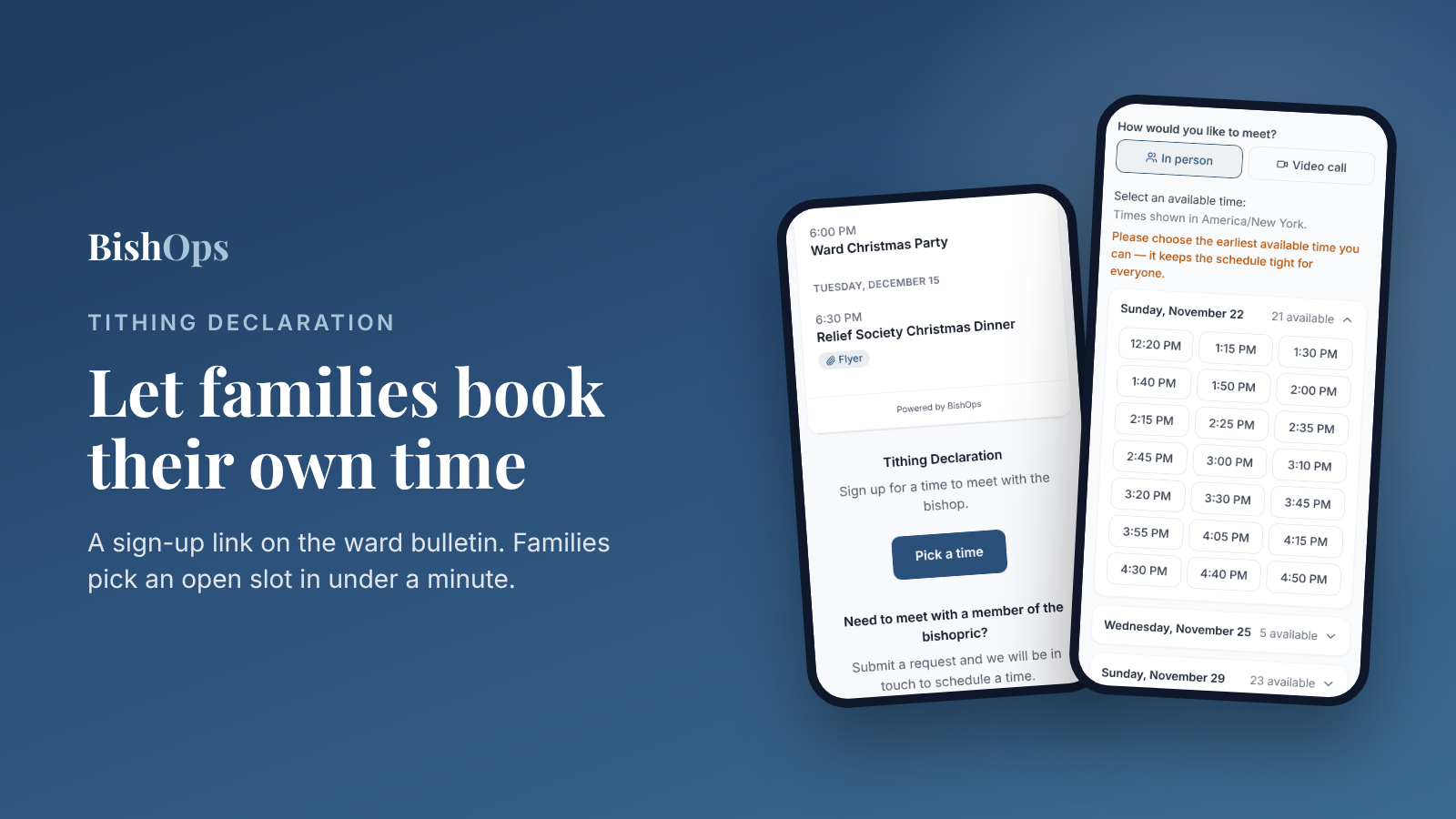
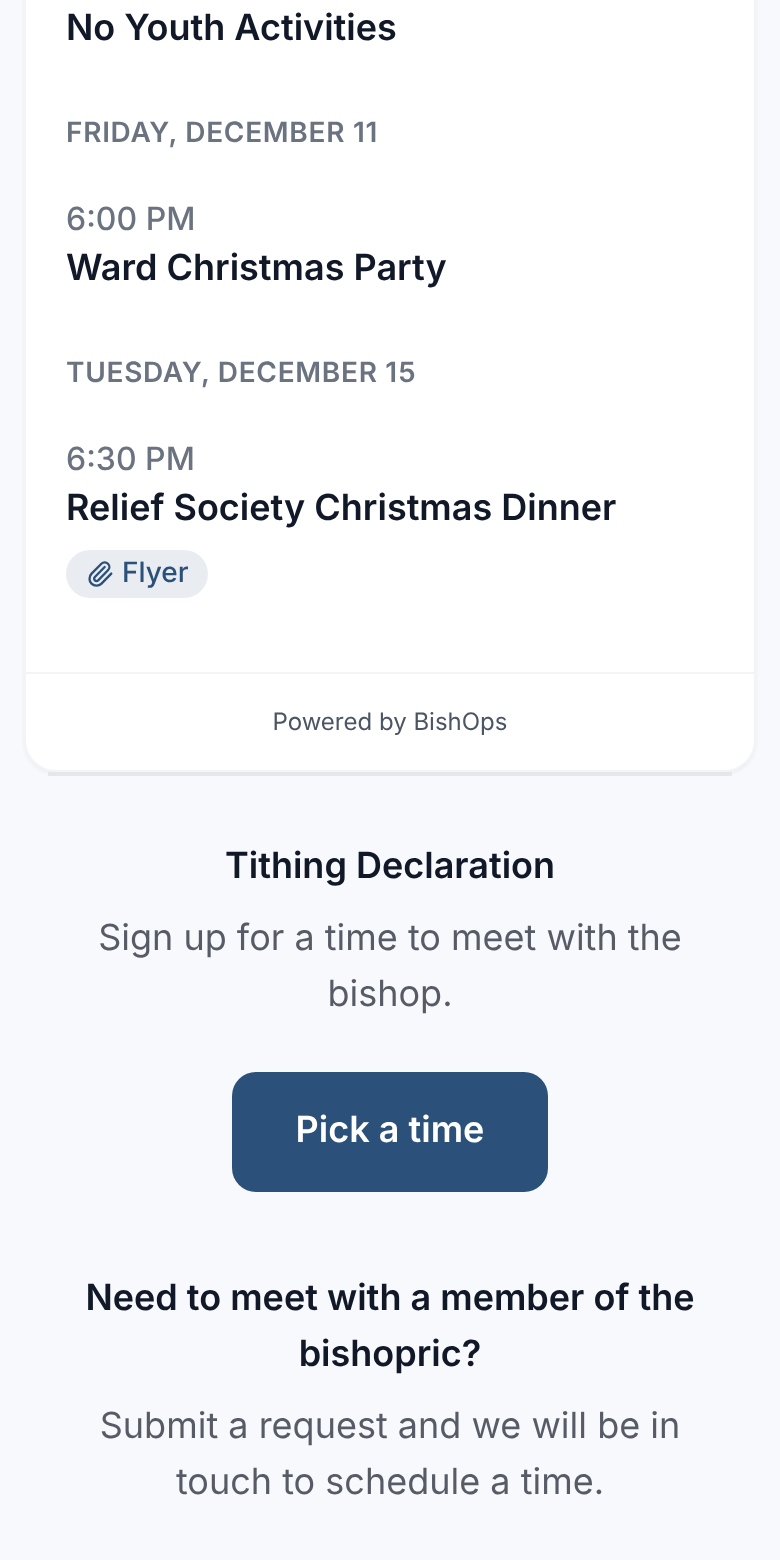
- Share one sign-up link. BishOps gives you a single link for the whole ward. While tithing season is on, it also appears on your ward's digital bulletin, with a short note inviting families to sign up, so every family that opens the program on Sunday sees it.
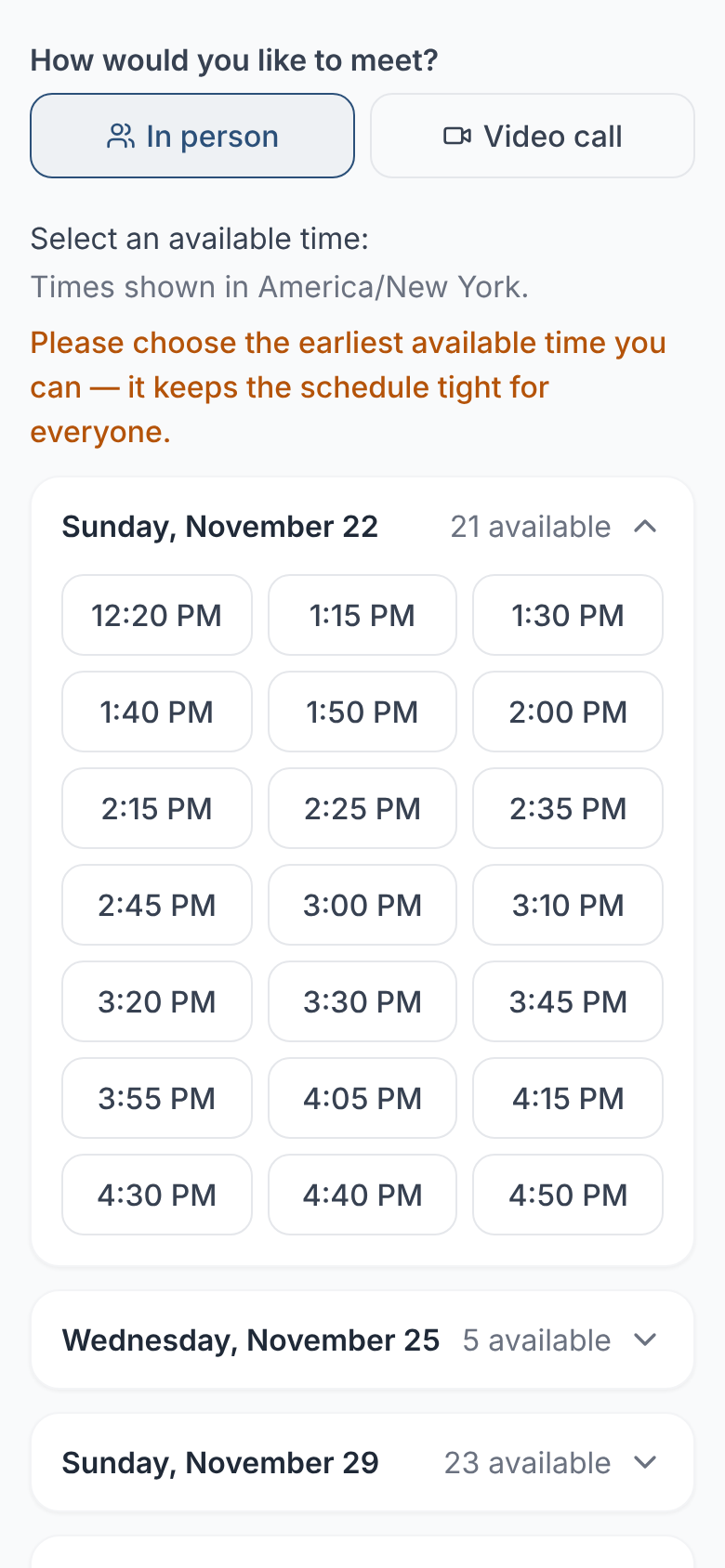
- Families pick a time. They open the link, choose an open slot, in person or virtual, and they're done. The appointment goes straight onto the bishop's schedule. No login, and no one in the middle.
- Turn it off when you're done. When the season ends, BishOps reminds you to turn it off. The link comes off the bulletin until next fall.
The executive secretary can still book a family directly, or send an individual booking link to a family who needs a nudge. But most families never need either.
A few tips for a smoother season
- Start early. Turning the link on right when the season opens (currently September) gives families and the bishop time to work them all in before a busy holiday season.
- Offer a mix of times. A couple of weeknight evenings, some Sunday afternoon slots and a few virtual appointments cover most families' schedules.
- Mention it from the pulpit once, and point to the bulletin. "The sign-up link is at the bottom of today's program" is easier than reading out times.
- Follow up personally with the families who don't sign up. Self-scheduling frees the executive secretary to spend their time reaching out to the families who need an invitation from a real person.
The point of the meeting
Tithing declaration isn't an audit. It's a few quiet minutes for a bishop to thank a family, hear how they're doing, and testify of the blessings of the law of tithing. Every hour the bishopric spends trading texts about time slots is an hour that could go toward those conversations. Let the families pick their own time, and save the effort for the families who need it.